
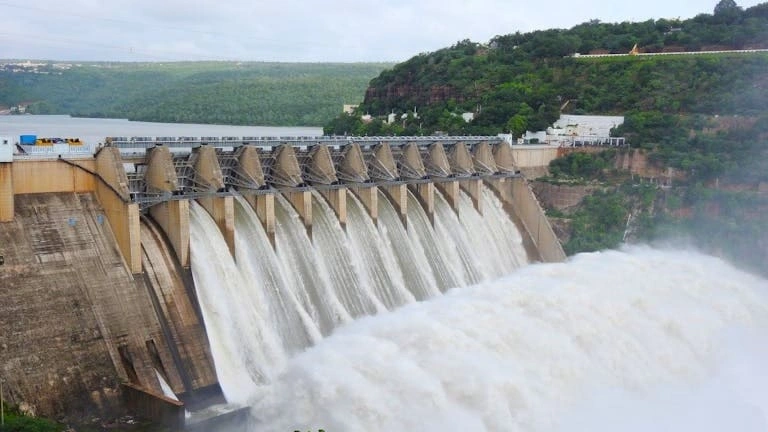
Training Course on Water Resource Management and Hydrological Modeling in GIS
Duration: 5 Days
Location: Nairobi
Course Overview
Integrated water resource management is increasingly essential as climate variability, population growth, and land use changes exert pressure on water availability and quality. Geographic Information Systems (GIS) combined with hydrological modeling provide a powerful platform for analyzing watershed dynamics, planning water infrastructure, managing catchments, and predicting flood and drought risks.
This course equips participants with both foundational knowledge and hands-on skills to apply GIS in managing water resources and performing hydrological modeling. It introduces concepts of watershed hydrology, water budgeting, runoff estimation, and hydrodynamic simulation using spatial data. Participants will learn to use tools such as HEC-HMS, SWAT, ArcHydro, and QGIS for catchment delineation, rainfall-runoff modeling, and flood risk mapping.
The course links hydrological analysis with real-world applications such as integrated watershed management, irrigation planning, water conservation, and climate resilience. It is tailored for professionals in government, water agencies, NGOs, and research institutions working on water security and environmental sustainability.
________________________________________
Course Objectives
By the end of the course, participants will be able to:
•Understand principles of water resource systems and watershed hydrology
•Use GIS to delineate watersheds and model hydrological processes
•Apply rainfall-runoff and flood prediction models using spatial data
•Integrate hydrological modeling tools such as SWAT, HEC-HMS, or ArcHydro
•Conduct floodplain mapping, groundwater recharge analysis, and water balance studies
•Support planning and decision-making for sustainable water resource management
________________________________________
Target Audience
This course is designed for:
•Water resource planners and hydrologists
•GIS and remote sensing professionals
•Environmental engineers and watershed managers
•Disaster risk reduction and climate change adaptation officers
•Academics, researchers, and consultants in water and land management
•Staff from water agencies, irrigation authorities, and NGOs
________________________________________
Training Methodology
•Expert-led sessions on hydrology and GIS applications
•Step-by-step tutorials on hydrological modeling tools
•Practical exercises using satellite data and DEMs
•Group projects and scenario simulations for watershed management
•Case studies from catchment-level water programs
________________________________________
Expected Outcomes
Participants will:
•Acquire technical capacity to perform hydrological analysis using GIS tools
•Create watershed maps, stream networks, and runoff models
•Analyze flood risks and simulate hydrological events under various conditions
•Generate outputs to inform water resource planning and investment decisions
•Integrate GIS and hydrology into sustainable water governance frameworks.
Course Modules / Key Topics
Module 1: Fundamentals of Water Resource Management and Hydrology
•Concepts of watershed hydrology, water balance, and catchment processes
•Drivers of water resource degradation and scarcity
•Role of GIS and remote sensing in hydrology
Module 2: GIS Tools for Watershed and Catchment Analysis
•Acquisition and preprocessing of elevation and hydrological datasets
•Watershed delineation and stream network extraction using DEMs
•Land use, soil, and rainfall data integration
•Exercise: Delineating a watershed and sub-basins using QGIS or ArcGIS
Module 3: Hydrological Modeling and Runoff Simulation
•Rainfall-runoff relationships and flow estimation methods
•Introduction to SWAT, HEC-HMS, and other modeling tools
•Setting up hydrological models and interpreting outputs
•Hands-on: Building a rainfall-runoff model for a sample watershed
Module 4: Flood Mapping and Surface Water Analysis
•Floodplain modeling using GIS and remote sensing
•Inundation mapping, early warning systems, and hazard zoning
•GIS-based modeling for reservoir and irrigation planning
•Exercise: Create a flood risk map using satellite rainfall data
Module 5: Groundwater and Water Quality Analysis in GIS
•Spatial analysis of aquifers and recharge zones
•Water quality monitoring and pollution source mapping
•GIS-based groundwater vulnerability assessment
Module 6: Integrated Water Resource Planning and Decision Support
•Decision support systems for water allocation and conservation
•Climate change impacts on hydrology and adaptive planning
•Policy linkages and integration of hydrological models into WRM programs
•Final Project: Develop a GIS-based water resource management strategy for a selected basin.
Course General Information:
This course is delivered by qualified and experienced trainers with extensive expertise in their respective fields. Our training approach combines interactive theory sessions, hands-on practical activities, group work, and case studies, ensuring a dynamic and impactful learning experience.
Training Location: The sessions will be held at PROSPERAS SKILLS CENTER, Nairobi, Kenya. We also offer tailor-made group training at client-requested locations upon prior arrangement.
Certification: Upon successfully completing the training, participants will be awarded a certificate from PROSPERAS SKILLS CENTER.
Fees and Inclusions: Covers tuition, training materials, lunch, and venue. Accommodation and airport transfers can be arranged upon request.
Payment Details: Payment must be made to our bank account prior to the commencement of training. Please forward proof of payment to: trainings@prosperasskillscenter.com
For Further Inquiries: Contact us via email: trainings@prosperasskillscenter.com
Water Resource Management and Hydrological Modeling in GIS
| Start Date | End Date | Online Fee (USD) | In-Person Fee (USD) | Register |
|---|---|---|---|---|
| 17 Nov, 2025 | 21 Nov, 2025 | 1000 | 1500 | Enroll |
| 24 Nov, 2025 | 28 Nov, 2025 | 1000 | 1500 | Enroll |
| 01 Dec, 2025 | 05 Dec, 2025 | 1000 | 1500 | Enroll |
| 15 Dec, 2025 | 19 Dec, 2025 | 1000 | 1500 | Enroll |
| 05 Jan, 2026 | 09 Jan, 2026 | 1000 | 1500 | Enroll |
| 12 Jan, 2026 | 16 Jan, 2026 | 1000 | 1500 | Enroll |
| 19 Jan, 2026 | 23 Jan, 2026 | 1000 | 1500 | Enroll |
| 26 Jan, 2026 | 30 Jan, 2026 | 1000 | 1500 | Enroll |
| 02 Feb, 2026 | 06 Feb, 2026 | 1000 | 1500 | Enroll |
| 09 Feb, 2026 | 13 Feb, 2026 | 1000 | 1500 | Enroll |
| 23 Feb, 2026 | 27 Feb, 2026 | 1000 | 1500 | Enroll |
| 23 Feb, 2026 | 27 Feb, 2026 | 1000 | 1500 | Enroll |
| 02 Mar, 2026 | 06 Mar, 2026 | 1000 | 1500 | Enroll |
| 09 Mar, 2026 | 13 Mar, 2026 | 1000 | 1500 | Enroll |
| 23 Mar, 2026 | 27 Mar, 2026 | 1000 | 1500 | Enroll |
| 13 Apr, 2026 | 17 Apr, 2026 | 1000 | 1500 | Enroll |
| 20 Apr, 2026 | 24 Apr, 2026 | 1000 | 1500 | Enroll |
| 04 May, 2026 | 08 May, 2026 | 1000 | 1500 | Enroll |
| 11 May, 2026 | 15 May, 2026 | 1000 | 1500 | Enroll |
| 18 May, 2026 | 22 May, 2026 | 1000 | 1500 | Enroll |
| 08 Jun, 2026 | 12 Jun, 2026 | 1000 | 1500 | Enroll |
| 15 Jun, 2026 | 19 Jun, 2026 | 1000 | 1500 | Enroll |
| 22 Jun, 2026 | 26 Jun, 2026 | 1000 | 1500 | Enroll |
| 29 Jun, 2026 | 03 Jul, 2026 | 1000 | 1500 | Enroll |
| 06 Jul, 2026 | 10 Jul, 2026 | 1000 | 1500 | Enroll |
| 13 Jul, 2026 | 17 Jul, 2026 | 1000 | 1500 | Enroll |
| 20 Jul, 2026 | 24 Jul, 2026 | 1000 | 1500 | Enroll |
| 27 Jul, 2026 | 31 Jul, 2026 | 1000 | 1500 | Enroll |
| 03 Aug, 2026 | 07 Aug, 2026 | 1000 | 1500 | Enroll |
| 10 Aug, 2026 | 14 Aug, 2026 | 1000 | 1500 | Enroll |
| 17 Aug, 2026 | 21 Aug, 2026 | 1000 | 1500 | Enroll |
| 31 Aug, 2026 | 04 Sep, 2026 | 1000 | 1500 | Enroll |
| 07 Sep, 2026 | 11 Sep, 2026 | 1000 | 1500 | Enroll |
| 14 Sep, 2026 | 18 Sep, 2026 | 1000 | 1500 | Enroll |
| 21 Sep, 2026 | 25 Sep, 2026 | 1000 | 1500 | Enroll |
| 28 Sep, 2026 | 02 Oct, 2026 | 1000 | 1500 | Enroll |
| 12 Oct, 2026 | 16 Oct, 2026 | 1000 | 1500 | Enroll |
| 26 Oct, 2026 | 30 Oct, 2026 | 1000 | 1500 | Enroll |
| 02 Nov, 2026 | 06 Nov, 2026 | 1000 | 1500 | Enroll |
| 09 Nov, 2026 | 13 Nov, 2026 | 1000 | 1500 | Enroll |
| 16 Nov, 2026 | 20 Nov, 2026 | 1000 | 1500 | Enroll |
| 23 Nov, 2026 | 27 Nov, 2026 | 1000 | 1500 | Enroll |
| 30 Nov, 2026 | 04 Dec, 2026 | 1000 | 1500 | Enroll |
| 07 Dec, 2026 | 11 Dec, 2026 | 1000 | 1500 | Enroll |
| 14 Dec, 2026 | 18 Dec, 2026 | 1000 | 1500 | Enroll |
No upcoming sessions available at this time.